Dinder
A US B2B distributor of medical supplements, supplies and PPE, selling to clinics, labs, hospitals and government health departments.
- EngagementFreelance
- DatesJuly 2025 to July 2026
- MarketUnited States
- RoleThe only commercial person on it
ExhibitLive
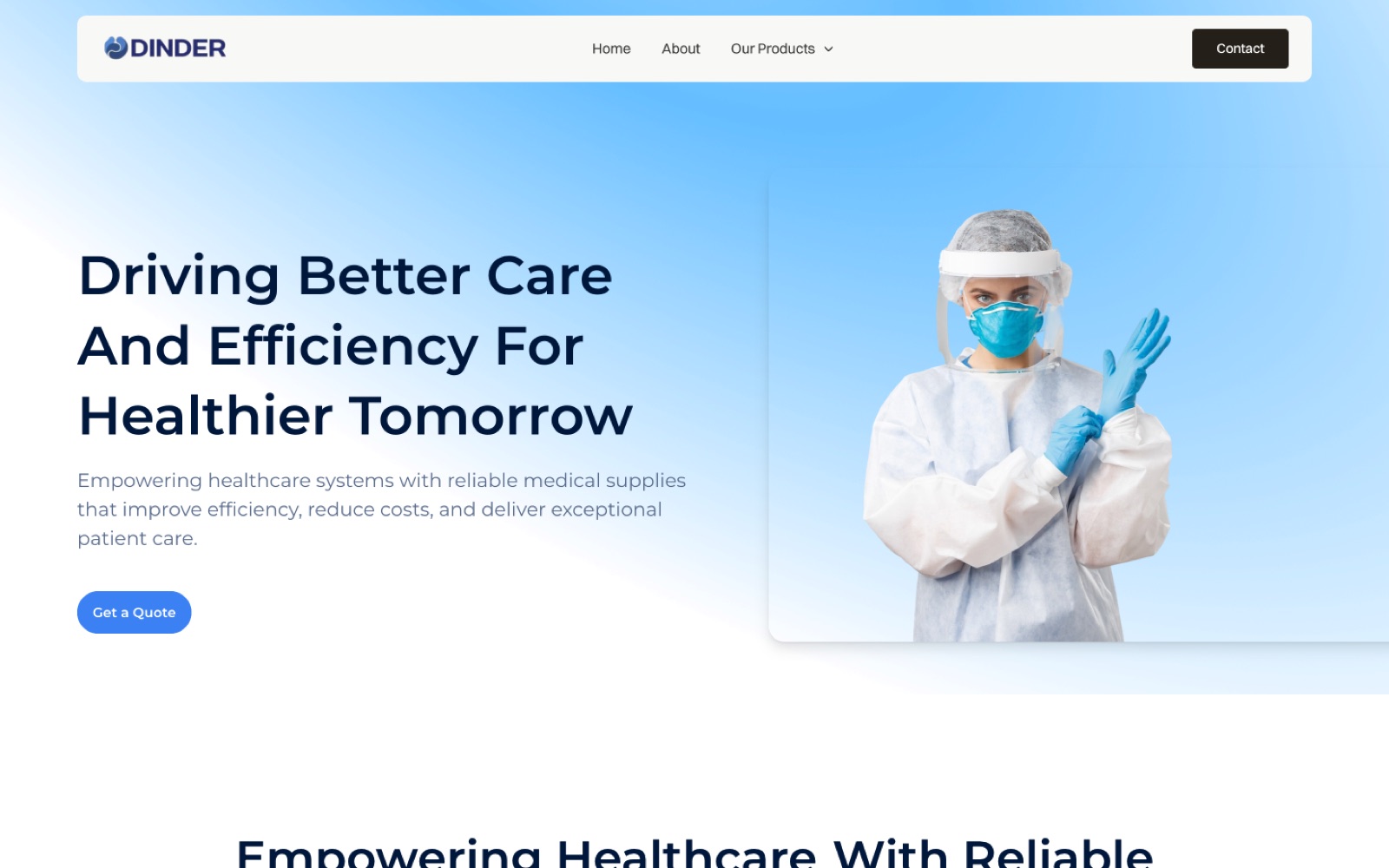
Three agents did the work of an outbound team. I was the part that could say no.
I built the website and wrote all of it.thedinder.com
- Duration
- One year
- Phases
- Two. Build the business, then make it sell.
- Systems
- Claude Code, Claude in Chrome with MCP, Google, LinkedIn, Apollo, Instantly
- Live
- thedinder.com
Docket10 papers
- Cold emailThe volume. Around 3,000 personalised emails a month, from the company's own addresses, three mailboxes warmed up before volume.
- Contact formsContact forms on prospect websites, for the companies whose decision makers had no findable email.
- Procurement portalsSAM.gov and DIBBS, the Defense Logistics Agency bid board, at 75 to 110 bids a day on weekdays.
- Claude Code
- Claude in Chrome with MCP
- Apollo
- Instantly
What they had
A new distributor in a crowded US supply market had no brand, no sales team and no budget to buy one. It needed a repeatable way to get in front of the people who actually sign for gloves, gowns and consumables.
The two phases
I was the only commercial person on it for a year, from July 2025 to July 2026. It ran in two phases.
Phase one, July to December 2025: build the business.
I built the website and wrote all of it. I worked on the contracts. I sourced warehousing options and worked the vendor contracts and supply arrangements that made the product real. I ran the company LinkedIn page. I had finished my psychology degree that summer.
Phase two, December 2025 to July 2026: make it sell.
I built a three-agent pipeline in Claude Code and ran it daily.
How the pipeline worked
Diagram of the three-agent outbound pipeline, in six steps. It runs against a list of US organisations that consume PPE. Agent one sources and enriches prospects through Google, LinkedIn and Apollo. Agent two researches each prospect and writes the email. A human approval step sits between agent two and agent three, and it is the only step the pipeline stops at. Agent three sends through Instantly. The outcome is 300 to 500 meetings booked a month.
InputAny US organisation that consumes PPE: clinics of every type, labs, hospitals, urgent care, blood banks, IV therapy, nursing homes, veterinary, dental, ophthalmology, aesthetics and government health departments.
Agent one
Source and enrich
Google, LinkedIn, Apollo. Claude in Chrome with MCP. An enrichment waterfall, built by hand.
Agent two
Research and write
Reads what the prospect sells, who they serve and what had just happened to them, then writes the email out of that research.
I read every one
Nothing sent until I had approved it. Where a site was too thin to research honestly, I wrote that email myself.
15 to 22 rejected or rewritten per 100
Agent three
Deliver
Instantly, from the company's own addresses. Three mailboxes at 20 to 40 sends per mailbox per day, warmed up before volume. Around 3,000 personalised emails a month.
OutcomeAround 400 meetings a month across three channels, booked onto the founders' Cal.com with a name and a time on each, at under $2 a booked meeting against $600 to $800 all-in a month. Nothing past the booking: the founders took the meetings and I was never shown what closed.
Every Saturday, a second and different model audited the week's records, independent of the model that generated them.
Agent one, sourcing and enrichment. Wired to Claude in Chrome with MCP. Google search to find target organisations, LinkedIn to identify the actual decision maker inside each one, Apollo for the contact detail. It is an enrichment waterfall, the pattern Clay sells as a product. I built this one by hand. I have used Clay as well.
Agent two, research and writing. For each prospect it read what they sell, who they serve, what they had announced recently and what was visibly going wrong for them, then wrote the email out of that research rather than out of a template.
Agent three, delivery. Through Instantly, from the company's own addresses, three mailboxes at 20 to 40 sends per mailbox per day, warmed up properly before volume.
The part that mattered most was the gate. I read and approved every email before it sent. In a batch of 100 I rejected or rewrote 15 to 22. The models hallucinated frequently, and left alone they would have sent confident nonsense to clinical buyers. Nothing factually wrong ever reached a prospect. Where a company's website was too thin to research honestly, I wrote that email myself.
And I audited myself. Every Saturday I ran a second, different AI model across the week's records to cross-check the data, deliberately not the model that had generated it. A model checking its own work is not a check.
I ran three channels, not one. Cold email was the volume. Contact forms on prospect websites caught the companies whose decision makers had no findable email. And I bid US federal procurement through SAM.gov and DIBBS, the Defense Logistics Agency bid board, at 75 to 110 bids a day on weekdays. The DLA is one of the largest buyers of medical supplies and PPE in the world, and it is a system almost nobody in outbound has ever opened.
The ICP was any US organisation that consumes PPE: clinics of every type, labs, hospitals, urgent care, blood banks, IV therapy, nursing homes, veterinary, dental, ophthalmology, aesthetics and government health departments.
What the numbers were, and where they stop
Around 3,000 personalised emails a month. Around 400 meetings a month across all three channels, booked onto the founders' Cal.com with a name and a time on each. All-in cost was roughly $600 to $800 a month, which puts a booked meeting under $2. Every input to that is a published list price, so the arithmetic is yours to redo.
| Figure | Unit | Basis |
|---|---|---|
| Around 3,000 | personalised emails a month | Phase two, December 2025 to July 2026. Three mailboxes at 20 to 40 sends per mailbox per day, warmed up before volume, sent from the company's own addresses. |
| 300 to 500 | meetings booked a month | Around 400 a month on average, booked onto the founders' Cal.com with a name and a time on each. Three channels fed it: cold email, contact forms on prospect websites, and US federal procurement bids. |
| 75 to 110 | federal quotes submitted a day | SAM.gov and DIBBS, the Defense Logistics Agency bid board, on weekdays. |
| 15 to 22 | emails rejected or rewritten per 100 | I read and approved every email before it sent. The models hallucinated frequently. |
| $600 to $800 | all-in cost a month | Everything the pipeline ran on, December 2025 to July 2026. |
| under $2 | per booked meeting | $600 to $800 a month all-in, against 300 to 500 meetings booked in the same month. Every input is a public list price. |
Questions about how this was actually run?
Bring the thing you are actually stuck on. I will not pitch you. If I am not right for it I will say so on the call rather than in an email three weeks later.
sontakkesamruddhijain89@gmail.com
linkedin.com/in/samruddhi-sontakke-11601621a